
Invited Speakers
Insights from global visionaries at the forefront of AI and Systems Engineering

Alberto Maria Metelli
Assistant Professor @ Politecnico di Milano
Alberto Maria Metelli is a Tenure-track Assistant Professor of Information Processing Systems with the Dipartimento di Elettronica, Informazione e Bioingegneria (DEIB) in the Artificial Intelligence and Robotics Laboratory (AIRLab) at Politecnico di Milano (PoliMi). He obtained the Ph.D. in Information Technology (cum Laude) in March 2021 at Politecnico di Milano, defending a thesis about environment configuration in reinforcement learning, awarded the “Premio NeoDottori di Ricerca Marco Cadoli 2021” as the best Italian Ph.D. thesis in Artificial Intelligence (from AIxIA). He is co-founder of ML Cube S.r.l., an innovative start-up, providing cutting-edge solutions for machine learning systems and life-cycle-management optimization. He won the FIS2 Starting Grant in 2025, ranked first amont the Computer Science and Informatics applicants, funded by MUR. His main research interests revolve around artificial intelligence and machine learning for sequential decision-making, in particular reinforcement learning. He is co-author of more than 80 papers in peer-reviewed international conferences and journals, including JMLR, AIJ, MLJ, ICML, NeurIPS, ICLR, AAAI, AISTATS, and COLT. He is a member of the ELLIS Society.
Reinforcement learning is traditionally built around a simple and powerful abstraction: an agent acts to maximize a scalar reward. But is a single number always an adequate representation? In this talk, I will explore reinforcement learning beyond the assumption of a given scalar reward function, focusing on settings where objectives must instead be inferred from preferences and other, possibly diverse, forms of feedback. Starting from inverse and preference-based reinforcement learning, I will discuss the relationship between preferences, utility representations, and rewards, and ask when observed feedback can actually be explained by a scalar reward function. When this is not possible, richer representations become necessary: preferences may be incomplete, behaviors may be incomparable, and the underlying problem may be inherently multidimensional. I will then connect these ideas to RLHF, where human preferences are typically modeled through a learned scalar reward. This perspective highlights the representational assumptions underlying this common pipeline and suggests alternative ways of incorporating preferences and other forms of human feedback into reinforcement learning.
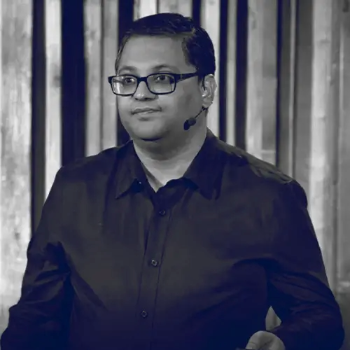
Supratik Mukhopadhyay
Professor @ Louisiana State University (LSU)
Supratik Mukhopadhyay is full Professor at Louisiana State University (LSU) at the Center for Computation and Technology and a Data Science Fellow at the Office of Data and Strategic Analytics. Prof. Mukhopadhyay led the DeepDrug team for automated drug discovery using Artificial Intelligence to semifinalist standing in the prestigious AI XPRIZE competition (among 147 teams worldwide), the world’s top competition for using AI for solving moonshot challenges. Combination therapy discovered by the DeepDrug Artificial Intelligence Platform for COVID-19 progressed to human trials at the Riverside University Health System, California. Dr. Mukhopadhyay also led the DeepFire team to the final of the space-based detection track of the Wildfire XPRIZE (among more than 300 teams globally), a global challenge to develop next generation technologies for ending destructive wildfires.
Apart from Drug Discovery, Prof. Mukhopadhyay has worked on AI for agriculture, education, port and supply chain security, satellite image understanding, video and image analytics, design of intelligent buildings and transportation systems, wildfire prediction and detection, conservation of endangered species, intelligent cyber-physical-human systems, etc. His DeepSat framework for satellite imagery understanding influenced NASA Earth Exchange (NEX). In the last 16 years, Prof. Mukhopadhyay has garnered more than $9 million in research grants. His research has been funded by the NSF, DARPA, ARO, ONR, NGA, NASA, DOE, USDOT, NRL, USDA, state agencies, nonprofit foundations, and private industry. Prof. Mukhopadhyay has published more than 145 refereed publications in reputed journals and conferences. He has been awarded 4 US Patents and 1 Indian patent and has 8 US patents pending. He has received numerous awards for his research including a ten year impact award runner up at the ACM Sigspatial 2025. He cofounded a startup Ailectric for commercializing his research on sound, video, and image analytics. He serves as an associate editor for IEEE Transactions on Artificial Intelligence and Remote Sensing letters and has served in the program committees of AAAI.
In spite of advances in vaccines and antibiotics, a tremendous amount of research effort has been invested in the recent years for discovering drugs for diseases without a known cure. Millions of people globally suffer from health conditions that necessitate the development of new and more effective treatments. The widespread and prolonged use of antibiotics has led to drug-resistant infections, making current treatments less effective. While antibiotic resistance is increasing rapidly, the development of new antibacterial drugs has slowed to an all-time low. This highlights the urgent need for novel methods to discover new antimicrobial agents. However, traditional drug development techniques are slow, inefficient, and expensive. To address these challenges, we have developed Deep Drug, an AI-powered drug design pipeline that can interpret vast datasets to identify potential new therapeutics. This technology can significantly accelerate drug discovery, reducing both development time and costs.
Climate change and global warming are today recognized as problems that threaten the very existence of humanity on earth. In the recent years, human civilization has been threatened by natural disasters – hurricanes, tornadoes, rise in sea level, droughts, floods, desertification of land, erosion of coastal areas, wildfires, etc. Human activity has resulted in water and air pollution that is adversely affecting population health. Encroachment of humans in animal habitat have threatened biodiversity and ecological balance and have increased the possibility of transmission of diseases from wildlife to humans leading to possible pandemics/epidemics. Environmental disasters have diminished agricultural productivity and led to proliferation of pests, lack of grazing land resulting in reduced animal husbandry, causing increased poverty and reduced food security.
We show how AI can help in tackling the environmental challenges mentioned above through information gathering, processing and analyzing, decision making, observing consequences, and feeding back for forecasting. We discuss our recent work in using AI/ML for carbon mapping, hypoxia predictions, climate smart agriculture, wildfire prediction and detection, preserving biodiversity, and energy efficiency in built environment.