
Keynote Speakers
Insights from global visionaries at the forefront of AI and Systems Engineering
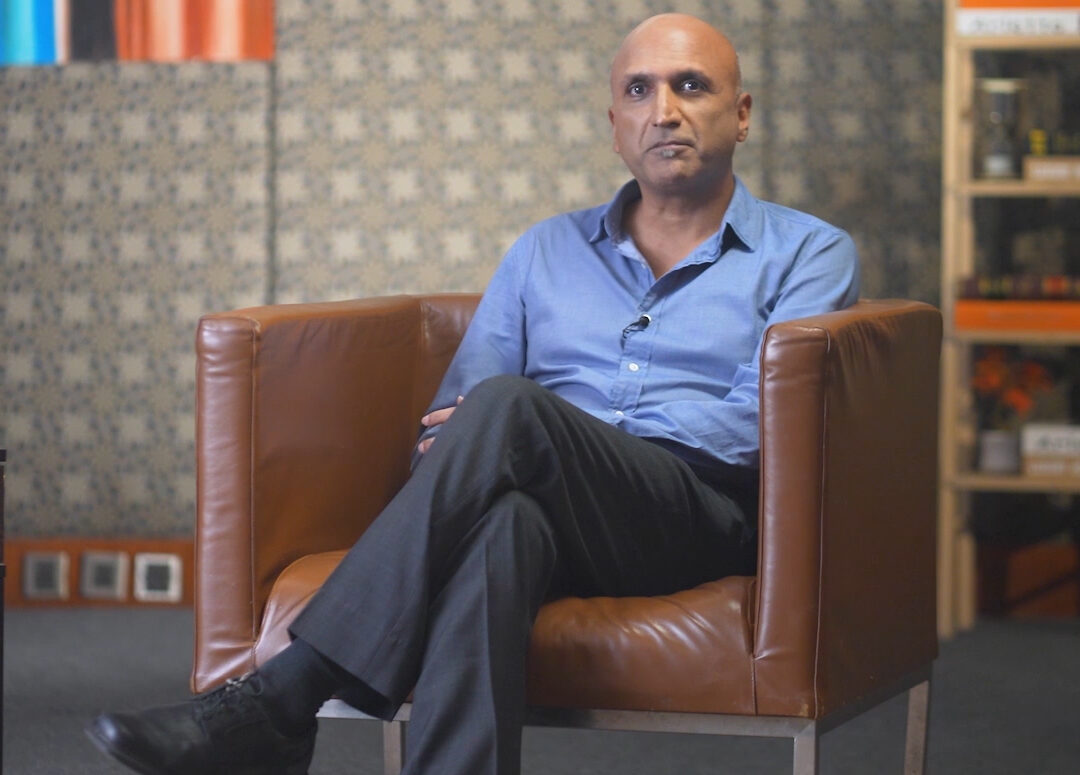
Dr. Rajeev Rastogi
VP and Head of Research @ Amazon India
Rajeev Rastogi is the Vice President of Machine Learning (ML) for Amazon’s International Stores business. He leads the development of ML solutions in the areas of Search, Advertising, Deals, Catalog Quality, Payments, Forecasting, Question Answering, Grocery Grading, etc. Previously, he was Vice President of Yahoo! Labs Bangalore and the founding Director of the Bell Labs Research Center in Bangalore, India. Rajeev is an ACM Fellow and a Bell Labs Fellow. He has published over 125 papers, and holds over 100 patents. He currently serves on the editorial board of the CACM, and has been an Associate editor for IEEE Transactions on Knowledge and Data Engineering in the past. Rajeev received his B. Tech degree from IIT Bombay, and a PhD degree in Computer Science from the University of Texas, Austin..
In this talk, I will first present a brief overview of AI applications in E-Commerce across customer experience, seller experience, catalog quality, operations, ads, and payments. I will then talk about three key learnings to develop high-performance AI applications – leverage global structure, fine-tune smaller models with application-specific data, and ingest rich feature representations during fine-tuning. Finally, I will describe three pieces of work underlying our learnings – 1) Asymmetric recommendations using GNNs with dual embeddings, 2) Visual Question Answering (VQA) using Vision Language Models (VLMs) fine-tuned with E-Commerce data, and 3) Joint shadow generation and relighting using bridge matching conditioned on light-geometry interaction (LGI) maps.

Prof. Michele Magno
Professor & Head of Edge AI and Sensing Lab @ ETH Zurich
Michele Magno (Fellow Member, IEEE) is Professor and Head of the Project-Based Learning Center at ETH Zurich, where he also leads the Edge AI and Sensing Lab. In 2026, he will be Head of the Edge AI and Sensing Lab at the Italian Institute of Artificial Intelligence, conducting transformative, application-oriented research contributing to innovation and industrial transformation.
His research focuses on wireless sensor networks, wearable systems, edge machine learning, smart sensing, and autonomous robots. With over 400 publications, he has established strong partnerships with industry leaders including IBM Research, Sony, STMicroelectronics, and Ferrari.
Recent advances in sensing technologies and edge artificial intelligence are enabling a new generation of intelligent systems capable of operating directly in the physical world with low latency, reduced energy consumption, and increased autonomy. This talk presents advances in sensing and edge AI technologies for intelligent embedded systems, ranging from wearable devices to autonomous robots, highlighting hardware-software co-design approaches that enable real-time AI directly on battery-operated platforms.

Cesare Alippi
Professor@Politecnico di Milano (Italy) & Università della Svizzera italiana (Switzerland)
CESARE ALIPPI is Professor with the Politecnico di Milano (Italy) and Professor with the Università della Svizzera italiana (Switzerland); he is visiting Professor at the Guandong University of Technology (China) and Consultant Professor at the Northwestern Polytechnic of Xi’An (China). He has been a visiting researcher/professor at UCL (UK), MIT (USA), ESPCI (F), CASIA (RC), A*STAR (SIN), U.Kobe (Japan). Alippi is an IEEE Fellow, ELLIS Fellow, INNS Fellow and AAIA Fellow, Past Board of Governors member of the International Neural Network Society, Past member of the Administrative Committee of the IEEE Computational Intelligence Society (CIS), Past Board of Directors member of the European Neural Network Society, Past Vice-President education of the IEEE Computational Intelligence Society, Associate Editor of Proceedings of IEEE and other journals, Past Associate editor of the IEEE Computational Intelligence Magazine, the IEEE-Transactions on Instrumentation and Measurements, IEEE-Transactions on Neural Networks, IEEE-Transactions on Emerging Topics in Computational Intelligence and member and chair of many IEEE committees. In 2024 he received the IEEE CIS Enrique Ruspini Meritorious Service Award, the 2018 IEEE CIS Outstanding Computational Intelligence Magazine paper award, the 2016 Gabor Award from the International Neural Networks Society and the Outstanding Transactions on Neural Networks and Learning Systems Paper Award from the IEEE Computational Intelligence Society; in 2013 the IBM Faculty award; in 2004 the IEEE Instrumentation and Measurement Society Young Engineer Award. Current research activity addresses graph-based learning, adaptation and learning in non-stationary environments and Intelligence for embedded, cyber-physical systems and IoT. For the graph-based learning research please refer to http://gmlg.ch He holds 8 patents, has published one monograph book (translated in Chinese), 7 edited books and more than 250 papers in international journals and conference proceedings.
Irregular spatiotemporal data consist of observations collected asynchronously across different times and spatial locations. Unlike regular data, their inherent irregularity makes traditional methods designed for discrete-time sequences and Euclidean spaces partly ineffective. In this talk, we explore how graph deep learning leverages the existence of relational dependencies to tackle both interpolation (imputation) and extrapolation (prediction) challenges. We will cover techniques for reconstructing missing data from a limited set of observations by enforcing spatiotemporal consistency, as well as introduce forecasting methods for predicting future values from sparse inputs. Finally, we will see how virtual sensors readings can be inferred from the graph structure provided some exogenous information is available.